Following the grueling Canyons 100 Miler, my recovery was more drawn-out than I’d anticipated, forcing me to confront the limits of my endurance in unexpected ways. For nearly a week and a half, I struggled to walk even a few steps at a time. The shin splints I’d developed during the race were deeper and more persistent than I’d ever experienced, leaving my lower legs feeling as if they were carved from stone. The discomfort lingered, refusing to subside quickly, and demanded my patience. As the shin splints finally started to ease, the poison oak I’d encountered along the trail took its own toll. My legs were swollen, itchy, and raw, prolonging the recovery even further. I was essentially immobilized, caught in a cycle of waiting for both the internal and external damage to heal. It took nearly three full weeks before I could even think about lacing up my shoes and hitting the trails again.
During this time, I made a conscious decision to step away from any structured training or regimented goals. Instead, I focused on simply listening to my body, accepting the slower pace of recovery. I tried to embrace the process of healing for what it was, even though I was itching to get back out there. For those who run consistently, taking time off is often one of the hardest things to do. The drive to move, the habit of pushing yourself forward—it all makes staying still feel counterintuitive. I had to remind myself that this rest was necessary, that allowing myself this space would ultimately make me stronger when I returned.
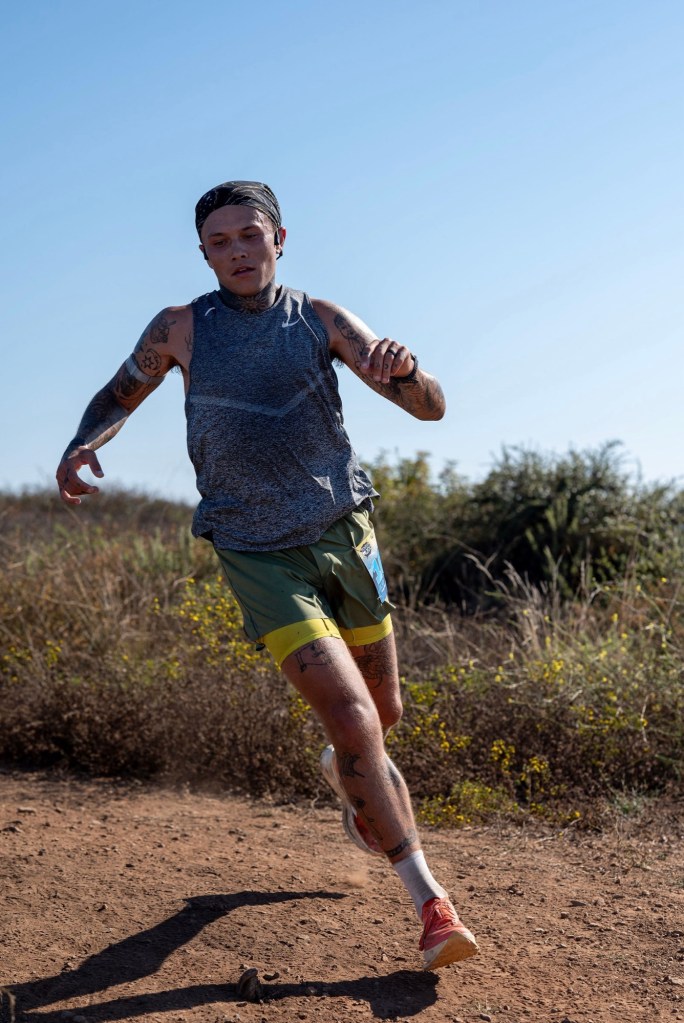
Once I felt stable enough to begin training again, I recognized the need for a shift. The Canyons race had exposed a new layer of nerves and uncertainty within me. Rather than diving straight back into ultra distances, I decided to pivot toward shorter races, intending to build up my comfort with racing environments and hone my speed. I set my sights on three races in the SoCal area—the Black Mountain 25K, Valley Crest Half Marathon, and Tough Mugu 25K. Each promised fast competition and would give me a chance to test myself in shorter, more intense settings. It felt like a bold but necessary change, an opportunity to step outside my usual mindset and try something that had intimidated me for years.
The idea of “running” a race—of competing rather than enduring—felt both exhilarating and foreign. I hadn’t truly raced since high school, and stepping up to the starting line with the intent to push myself to the front added a new layer of pressure. Learning to pace myself and manage fueling strategies for shorter distances was an entirely new challenge. A few times, I even found myself leading, which felt surreal and disorienting. Being at the front was an entirely different experience—an open, uncertain space where every move felt like a guess. Without the familiar comfort of being in the middle of the pack, I felt the immediate impact of each decision without knowing if it would pay off.
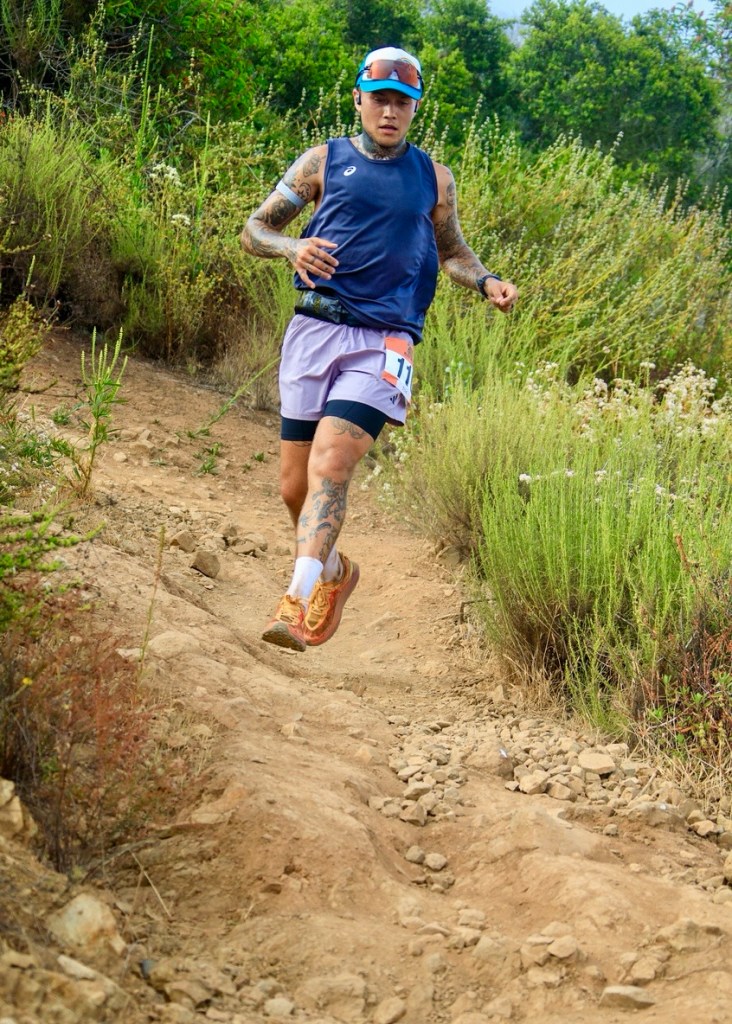
Despite my inexperience, I managed to place well in all three races, which gave me an unexpected boost in confidence. These races represented more than just a shift in my approach—they gave me a glimpse into what “could be,” a potential I hadn’t yet tapped into. For the first time, I saw the possibility of not just completing races but actively competing in them. I felt a new spark, a kind of ambition that had previously eluded me. This experience opened a door, showing me there’s more to running than endurance; there’s a realm of speed and strategy I’d barely scratched the surface of, and I’m was eager to see where this path might lead.


Leave a Reply