
Sodium and anxiety: my twin nemeses in ultrarunning. No matter how much salt I pour into my system, it never seems enough. And the anxiety? It’s a constant companion, gnawing at my edges whether I’m toeing the line at a local group run or standing among elite athletes at a major ultra.
I arrived at the 50K start line with a fire in my belly and a target burned into my mind: 3:30. The time wasn’t just a hope—it was there in my legs, in my training, in countless miles of preparation. It’s still there, somewhere beneath the surface. But this wasn’t its day to emerge.
The race exploded off the line like a shotgun blast. Faster than planned, faster than wise. My nerves were already frayed from a night of restless anticipation, my system redlining before I’d even taken my first stride. Inside, I was vibrating like a tuning fork struck too hard, the resonance threatening to shake me apart. Those first few miles were a study in disintegration—my carefully crafted race strategy crumbling with each step.
It wasn’t until mile 8 that I finally found my rhythm, like a ship emerging from turbulent waters into calmer seas. The lead pack had disappeared ahead, but I’d made peace with that. My plan had always been to save something special for the final ten miles, to close with a fury that would make up for any early conservatism.
Miles 9 through 19 unfolded like a runner’s dream: predominantly downhill, my legs moving with just enough power to make progress without courting disaster—or so I thought. Cruising through the mile 19 aid station, I felt invincible. I told my crew with unearned confidence that I was ready to push, ready to begin the real race.
Then everything unraveled.
Just over the first major climb past the aid station, my legs transformed into concrete pillars. I collapsed against the hillside like a marionette with cut strings. The next moments became a desperate dance: walking, stretching, popping salt pills like they were life-saving medicine—which, in that moment, they were. Though the worst of the cramps eventually relented, my stride was forever altered. Every attempt to open up my legs was met with hamstrings threatening rebellion, a constant negotiation between what I wanted to do and what my body would allow.
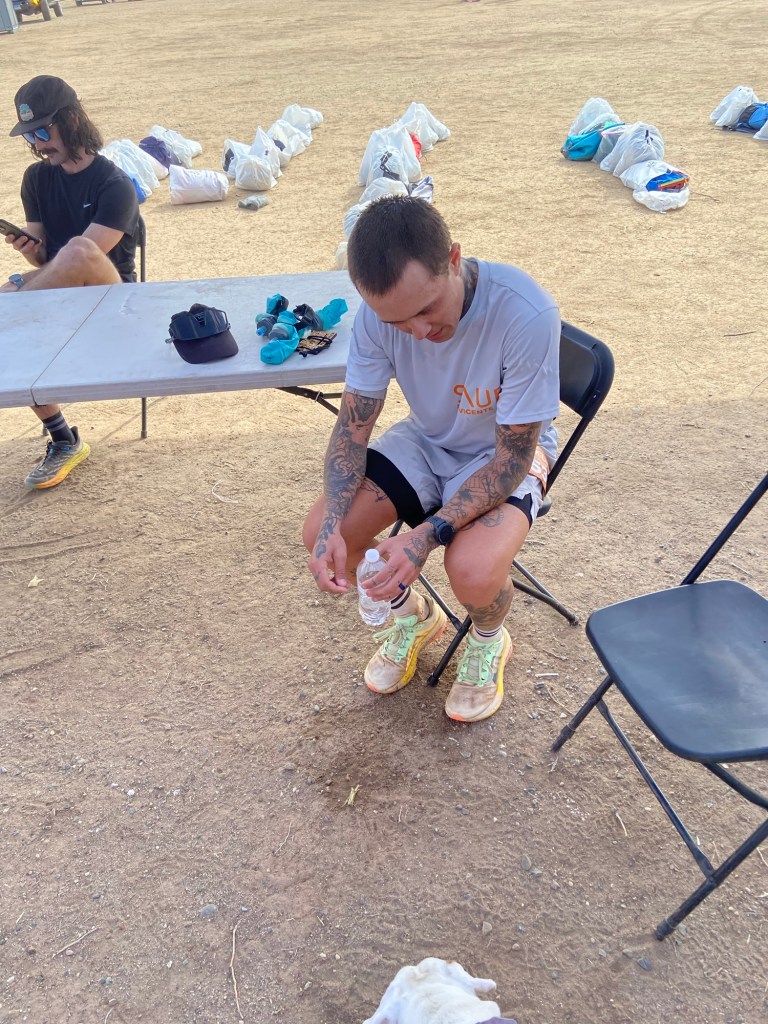
I crossed the finish line at 4:21—a gulf of nearly an hour separating me from my goal time. The competitor in me wants to dismiss this as failure, but the numbers tell a different story: top 30 in the men’s field, top 10 in my age group. Not the triumph I’d envisioned, but perhaps something else: a testament to perseverance, a reminder that sometimes simply finishing the fight is victory enough.
In the hollow quiet after the race, darker emotions descended like storm clouds gathering at dusk. Disappointment settled first, heavy and cold in my chest. Anger followed quickly, a familiar heat rising from my gut. Then came the resentment, bitter as copper on my tongue—resentment toward my body for its betrayal, toward my mind for its weakness, toward the whole damn sport for its indifference to my aspirations.
The addict brain—that cunning architect of destruction—began its whispered campaign almost immediately. I know its playbook by heart: first comes the suggestion of surrender, wrapped in sweet rationalization. Why keep pushing against these walls? Why endure this perpetual dance with disappointment? The voice grows more insistent with each passing hour, each twinge of defeated muscles, each glimpse of the finishing time that mocks me from my watch.
For 48 hours after crossing that finish line, every cell in my body ached for escape. The craving for a cold beer became almost physical—I could taste it, feel the glass sweating in my hand, imagine that first sharp bite of carbonation. The urge to burn it all down grew stronger with each passing hour. To delete my training plan, cancel future race registrations, throw my running shoes in the back of the closet where they belong. Anything to get a fix. Anything to dull this sharp edge of failure.
The rational mind tries to intervene, to point out the progress made, the lessons learned, the strength shown in simply finishing. But rationality feels like a paper shield against the tsunami of emotion. It’s a special kind of hell when you’re trying to hold onto the bigger picture while standing in what feels like the smoking ruins of your goals. The mind keeps circling back to “opportunity lost,” playing it on repeat like a broken record, each iteration cutting deeper than the last.
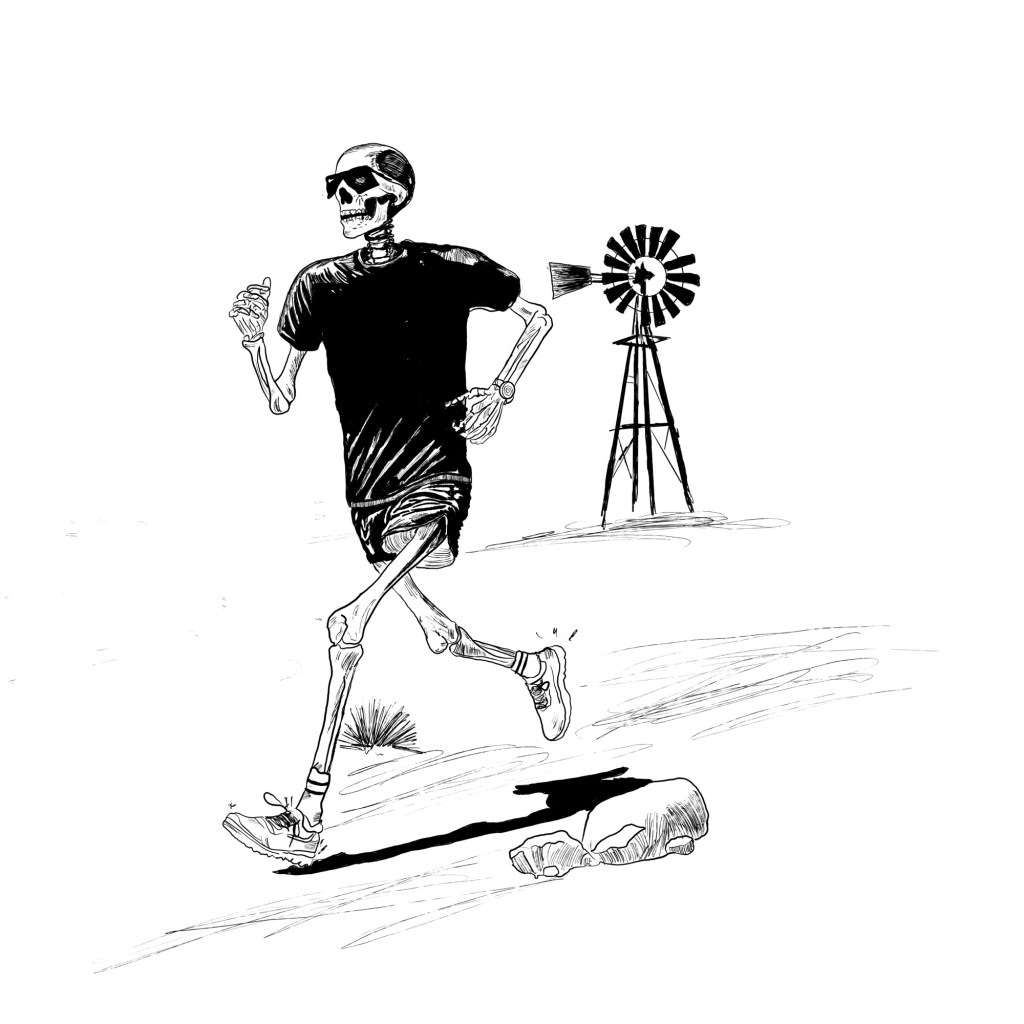
But here’s the truth I’m slowly learning to accept: this opportunity wasn’t lost at all. I took it, grabbed it with both hands, and ran with it until my legs gave out. What I got from it might not be what I wanted—might not be anywhere close to what I wanted—but it’s exactly what I needed. This is the brutal poetry of ultrarunning, the harsh wisdom of the trail: learning to be “fast” while staying “controlled,” when my natural state is pure chaos unleashed. It’s like trying to tame a wildfire without extinguishing its heat entirely.
These moments after defeat are when the real race begins. It’s not against the clock anymore, not against other runners, not even against the course. It’s against that voice that says to quit, to give in, to let go. It’s against the seductive pull of old habits, the comfortable embrace of familiar destructive patterns. The finish line isn’t marked by a timing mat or a banner—it’s marked by the moment I choose to rise again, to reload, to reset.
Each step forward is an act of defiance against that part of me that wants to surrender. Each new training plan written, each future race registered for, each early morning alarm set—they’re all middle fingers raised to the darkness that wants to swallow me whole. Because these lessons—however harsh, however unwanted—are shaping me into something stronger than I was before. They’re teaching me that control isn’t about perfection; it’s about persistence. That strength isn’t about never falling; it’s about how you handle the impact when you do.
So I’ll take these bitter pills of disappointment and transform them into fuel. I’ll let the anger cool into determination, let the resentment sharpen into focus. The next race is already out there, waiting. And while that addict brain might always be there, whispering its temptations, I’m learning to run with it rather than from it. Because sometimes the hardest ultras aren’t the ones we register for—they’re the ones we fight in the quiet moments after defeat, when no one’s watching, and the only finish line is the dawn of another day staying true to the path we’ve chosen.
 Bonk and Rally
Leave a comment