
Learning to push in running is like conducting an orchestra without a score Not that I know a lick about that. Just a hunch. You must feel the crescendos and diminuendos in your bones, know exactly when to surge and when to hold back. It’s an art I’m still grasping. The raw “empty the tank” sprint to the finish? That’s just the final movement. The true mastery lies in the subtle modulation of effort throughout those long middle miles, where differentials are quietly made.
The Palisades Fire had turned LA’s skies apocalyptic, smoke hanging thick over the coast like a toxic shroud. When I saw this trail race pop up on my feed, it felt like both an escape and a challenge. Sometimes the best decisions come from that intersection of preparation and impulse. So I threw my gear in the car and pointed it East to Arizona, leaving the ash-laden air behind.
Pre-race jitters hit different when you’re alone in unfamiliar territory. Standing at the start line, I felt every bit the outsider – no crew, no familiar faces, just me and 25 kilometers of unknown trail ahead. Was it the solitude amplifying my doubts? The strange surroundings? Or simply the recognition that I was stepping into a distance that demanded more than just raw enthusiasm?
I chose to start conservative, treating the first miles like a conversation rather than a declaration. The trail, while mercifully flat by trail running standards, still demanded respect. Fortune paired me with another runner who matched my rhythm. In running, as in life, sometimes the right pacer appears just when you need them. Without that serendipitous partnership, I might have succumbed to the twin temptations that haunt every runner: going out too hard and burning up, or hanging too far back out of excess caution.
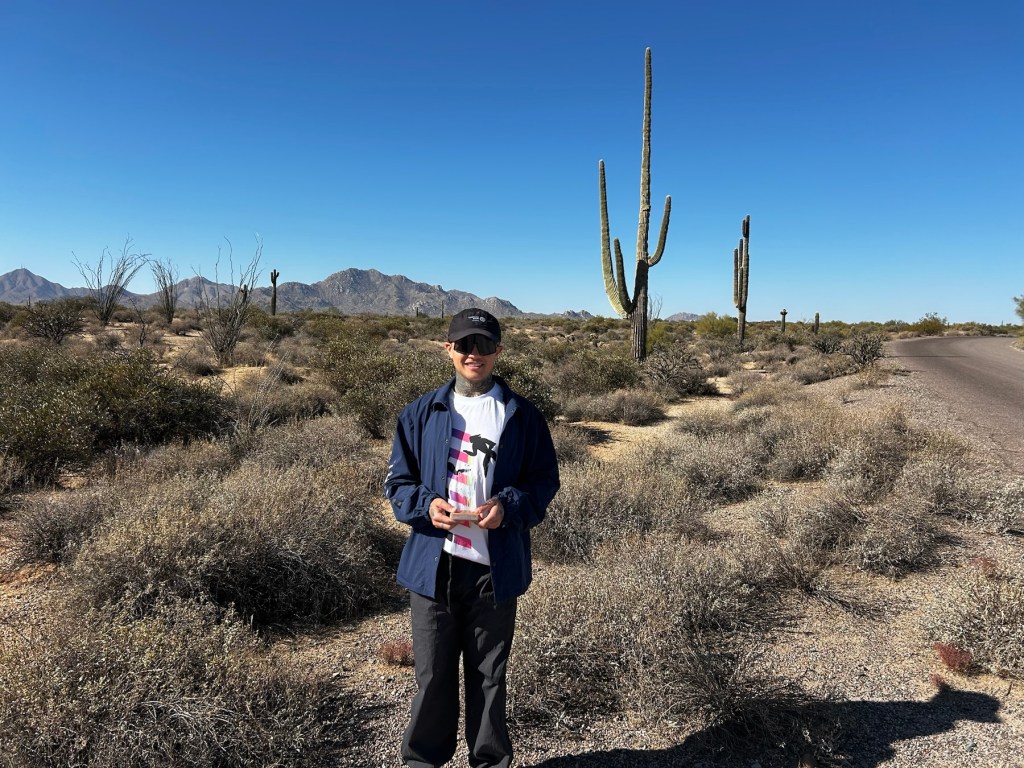
I crossed the finish line first, but victory came with an asterisk that gnawed at me – those untapped reserves, that powder kept dry. The margin was slim, mere seconds, but the real gap was between what I did and what I could have done. It’s a peculiar kind of regret, one that stings more than any placing. Second place with an empty tank would have felt cleaner somehow, more honest, than a win with fuel still in the basement.
Sobriety, like running, demands a brutal honesty with yourself about your capabilities and limitations. But more than that, it requires the courage to actually meet those capabilities, to push right up against those limitations. Both pursuits share that maddening paradox – the more experience you gain, the more you realize how much territory remains unexplored within yourself. There’s a certain comfort in holding back, in maintaining that buffer zone between your current effort and your absolute limit. It’s the same comfort that comes from keeping one foot in the shallow end, never fully committing to the depths of recovery or running.
The real challenge isn’t in the physical act of pushing harder – it’s in dismantling the mental frameworks we build to protect ourselves from discomfort. Every time I toe a starting line or face a challenging day in sobriety, I’m confronted with the same fundamental question: Am I truly willing to be vulnerable enough to find out what I’m capable of? Because that’s what maximum effort requires – a willingness to risk failure, to risk pain, to risk discovering that your best might not be enough.

This race, with its tentative victory, revealed more about my relationship with comfort than any decisive win or loss could have. It’s one thing to know you have more to give and choose to save it – it’s another to realize you’ve unconsciously chosen safety over possibility. In both running and recovery, the path to growth lies not in the comfortable middle ground, but in those moments when we dare to extend ourselves fully, to risk everything for the sake of discovering who we might become.
 Bonk and Rally
Leave a comment