The mention of this 50-mile beast first reached me in the sweltering summer of 2024. What began as a throwaway comment in a casual conversation stuck with me. The race wasn’t just another ultra on the calendar—it was a missing puzzle piece I hadn’t known I needed, perfectly positioned between the Kodiak 100K and the looming challenge of Black Canyons 50K.
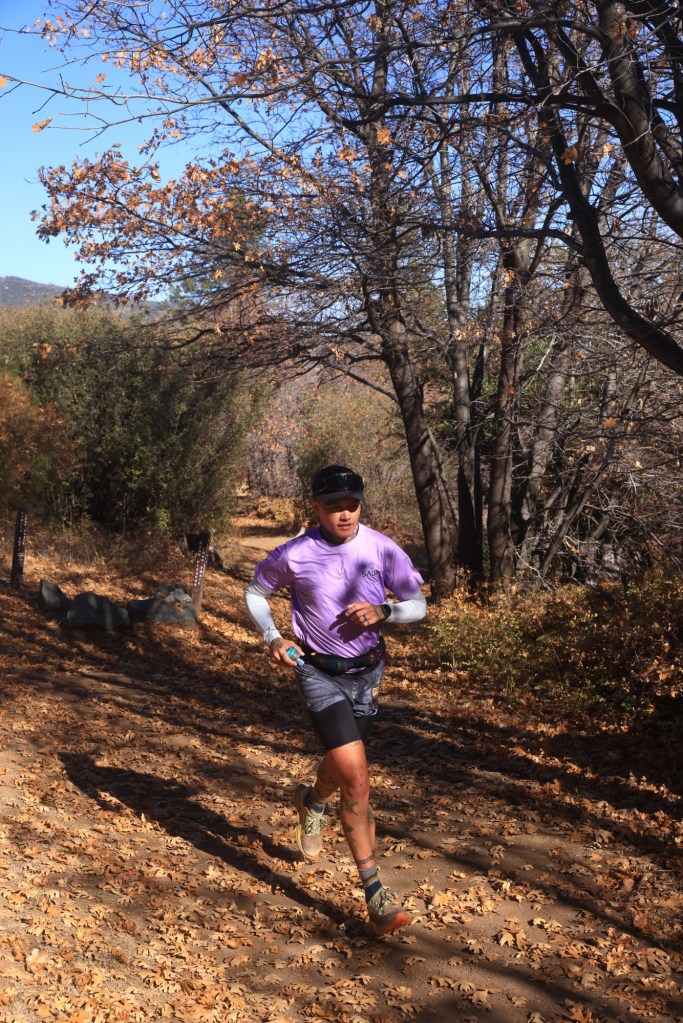
The memory of Kodiak haunted me in a way as the race approached. Despite crossing that finish line strong, I could feel the ghost of untapped potential lingering in my muscles. I’d played it too safe, left too much in the tank, and that cautious approach had been gnawing at me.
This time would be different. As I mapped out my strategy, I wasn’t interested in merely surviving another ultra or posting a respectable finish time. I wanted to blow up and drop or finish. The arbitrary window of 7:15 to 7:30 I set was just that—arbitrary. What I craved was more raw. I wanted to feel the edge of my capabilities, to push until my legs screamed and my lungs burned, to find out what happened when I didn’t hold back all the way from the start.
Let me amplify this crucial turning point with sharper details and deeper emotional resonance:
The race unfolded like a predator’s chase in those first 13 miles. Our pack of four carved through the early morning darkness, each footfall purposeful, each breath measured. The pace wasn’t just strong—it was intoxicating. Every mile marker validated our aggression: 7:15, 7:20, 7:25. Not conservative, but not suicidal either. My body was a finely-tuned engine, humming with controlled power.
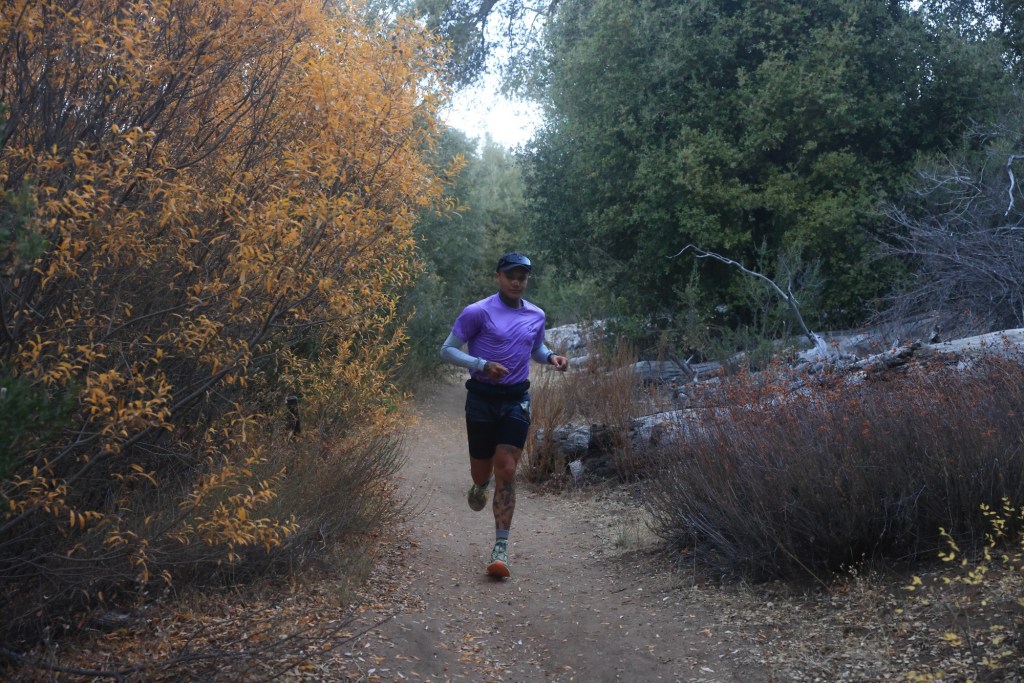
Mile 20’s climb hit like a heavyweight’s jab. As the grade steepened, gaps emerged in our formation. I watched as two runners pulled ahead, their silhouettes dissolving into the landscape. Pride whispered for me to chase; wisdom demanded patience. I chose solitude, finding my rhythm in the isolation, converting the burn in my quads into fuel for the upcoming descent.
Then came the moment that would test every ounce of my mental fortitude. Bombing down that descent, drunk on gravity’s pull, I blew past the critical turn. The realization didn’t hit until I spotted the runner ahead frantically scrambling uphill, his face a mirror of my imminent dread. We collided in a moment of shared panic, GPS watches confirming our worst fears: nearly a mile off course. The mathematics of our mistake—15 precious minutes evaporated, over 100 calories burned on this pointless detour—sent my mind spiraling toward a dark place.
The fury rose like bile in my throat. Every step back up that hill was a battle between rage and reason. Years of training, months of preparation, and I’d fucked up basic course navigation. The self-loathing threatened to consume me, to derail everything I’d worked for.
Then came the pivotal moment at the aid station, where my wife’s presence acted as an emotional anchor. As I spewed out my frustration, calculating lost positions and squandered time, she cut through my spiral with surgical precision: “The race isn’t over. You don’t know where anyone is. Run YOUR race.” Her words weren’t just encouragement—they were a command to reset, to reject the temptation of self-pity.
Walking out of that aid station, I made a pact with myself: this mistake would be a footnote, not the headline. The extra mile? Now it was armor, proof of my resilience. Those lost minutes? Fuel for the fire. The real race—my race—was just beginning. It was time to hunt.
The halfway point wasn’t just a milestone—it was a launching pad. My body hummed with controlled violence, like an engine finally unleashed from idle. The previous miles had been prologue; now came the real story. I locked into a 7:45 pace that felt like dancing on the razor’s edge of sustainable agony. Every footfall was deliberate, every breath calculated, as I carved through the miles with mechanical precision.
Then the ground reached up and snatched me. The fall came without warning—a brutal reminder that ultrarunning respects no one’s plans. I slammed into the earth with enough force to rattle my teeth, skin meeting rock in a painful introduction. But there was no time for self-pity. I sprang up like a boxer refusing to stay down, spitting dust and defiance. The fall became fuel, another log on the fire of determination burning in my chest.
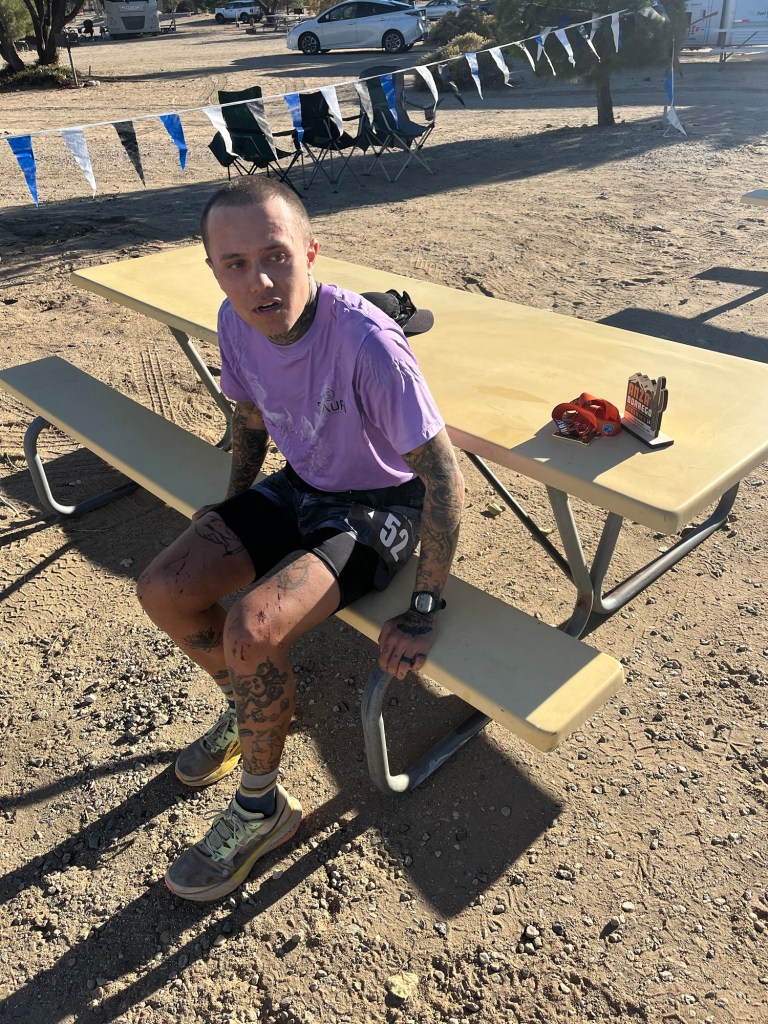
The sight of my wife at the final crew aid station should have been pure comfort, but my body was starting to betray me. My quads screamed their displeasure with every step, and a deep fatigue had begun seeping into my bones like cold water. Her words of encouragement echoed in my ears as I faced what came next: a section of course that seemed designed by a sadistic genius.
The four-wheel-drive road wasn’t just steep—it was a vertical wall of loose rock and sand. Each step required heightened focus, my calves burning in protest. Then came the sandy wash, a special kind of hell where each step sank and shifted, stealing precious energy with every stride. It wasn’t running anymore—it was survival, pure and simple.
Two more falls ripped through my remaining resolve. The second one introduced me to a cholla cactus, its spines piercing through my skin like nature’s own acupuncture gone wrong. Blood mixed with sweat, pain mixed with determination. The fatigue wasn’t just physical anymore—it had become existential, a deep questioning of every life choice that had led me to this moment.
Those final three miles? They were a descent into my own private hell. Dehydration wasn’t just thirst—it was a fundamental betrayal of my body’s basic functions. My mouth felt like sun-baked leather, my thoughts fragmenting like broken glass. The world narrowed to a tunnel of pain and purpose. Each step became an act of pure will, a middle finger raised to my limits.
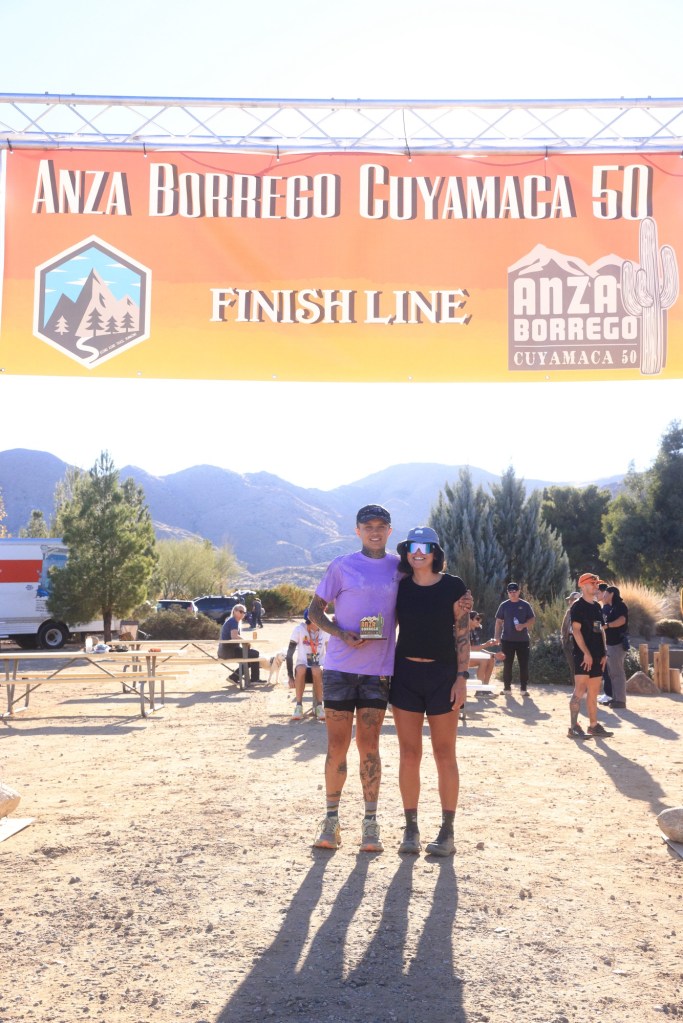
Eight hours of warfare against distance, terrain, and my own limitations culminated in that finish line crossing. Third place was my final position. My body felt like a battlefield: blood-stained, cactus-punctured, dehydrated to the core. But standing there, I knew I had finally answered the question that had haunted me since Kodiak. I hadn’t just participated in this race; I had waged war with my own limitations and emerged victorious, in my own specific way.
 Bonk and Rally
Leave a comment